How the body of a pirate came to hang at local landmark and become part of borough's history
By Gary Rowlatt 1st Jun 2026

THE River Thames has been integral to the area now known as Thurrock since settlers first pitched up on its riverbanks. Local writer Gary Rowlett has steeped himself in the folklore and history over many centuries and has prepared a series of articles reflecting The River's Memory
In the first he visits the forgotten Thurrock shore where Captain Kidd's body hung as a warning to London's sailors
FOR three centuries, almost every ship entering London passed beneath the iron cage on the Tilbury shore. Few people in Thurrock know the site exists. Now the last ferry that crossed those same waters has made its final run.
On 30 March 2024, the Tilbury–Gravesend ferry made its final crossing. For at least 450 years it had run between those two shores.
In 1701, passengers boarding that ferry did so within sight of something few modern Thurrock residents have ever heard of: an iron gibbet, raised high above the waterline, containing what remained of Captain William Kidd.
The site was called Tilbury Ness. It sat along the same bend in the Thames that the ferry crossed for four and a half centuries. And for a few years after 1701, it was one of the most deliberately visible places on the entire river.
A privateer, a trial, and a very public warning.
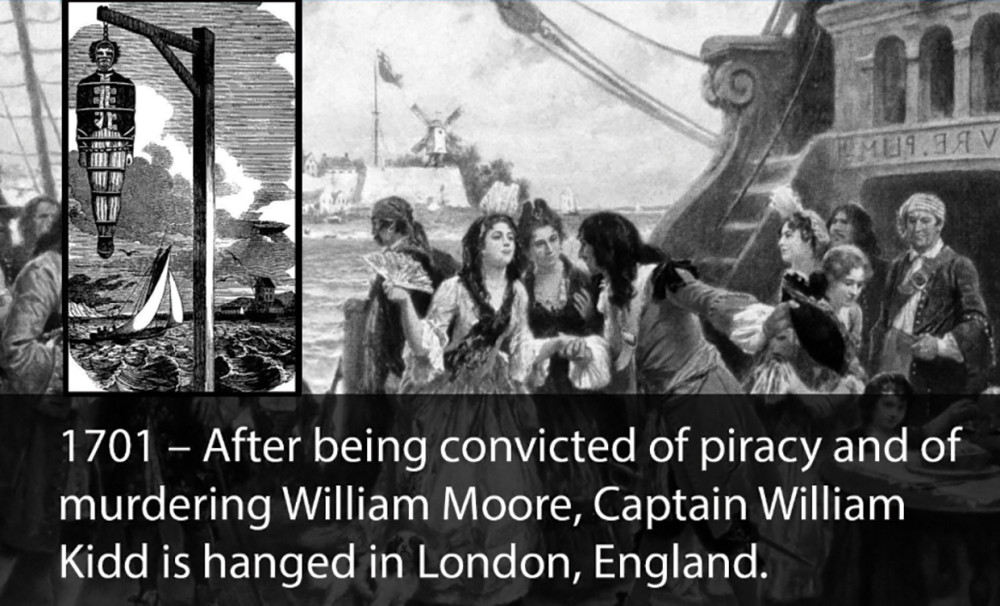
Captain William Kidd was a privateer — a sailor licensed by the Crown to attack enemy ships — who was convicted of piracy and hanged at Execution Dock in Wapping in 1701. His final journey began by water. He was brought into London guarded and bound, the river tightening around him dock by dock as the shoreline crowded in.
At Execution Dock, the tide was already climbing the posts when they fitted the rope. On the first drop, the rope snapped. A murmur rippled backward along the wharf. The authorities were unmoved. A second rope was fixed. The work was finished.
Download our Nub News App!
- It’s FREE and available now- Breaking news notifications
- Your Town in Your Pocket


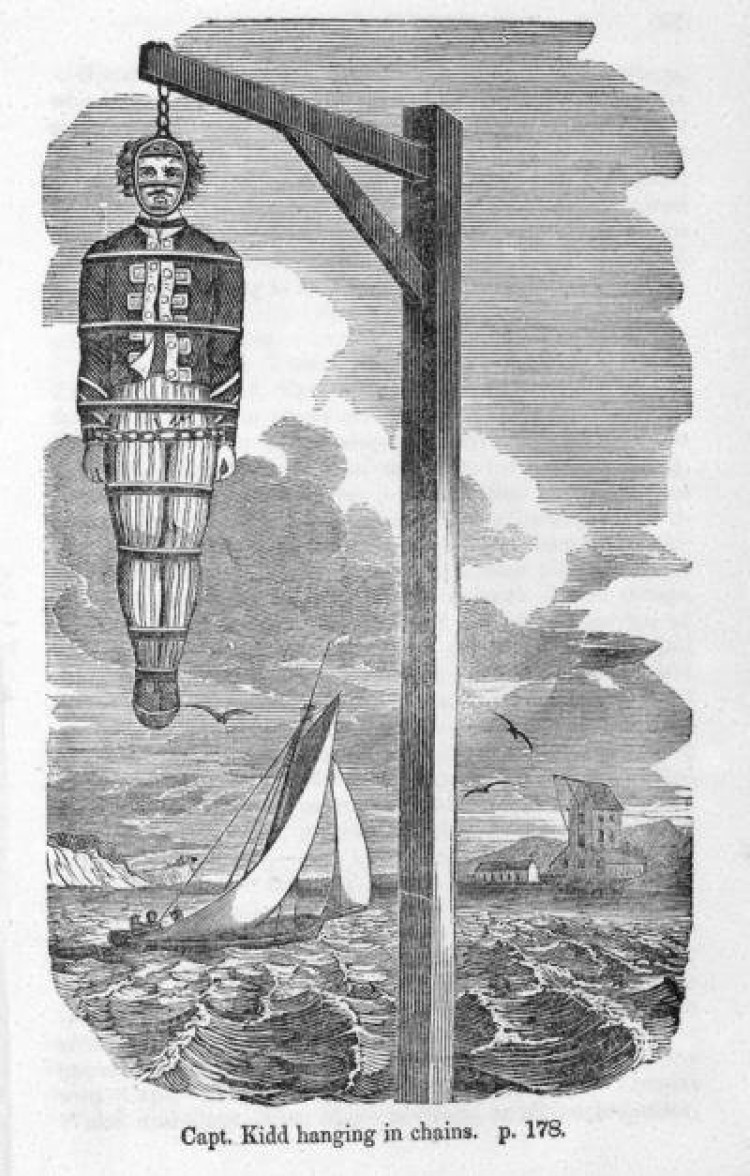
When the tide turned, they cut him down. His body was coated in tar, enclosed in iron, and carried away in a small boat heading downriver. Somewhere along the Tilbury reach they raised the cage and left it to the elements.
Why Thurrock — and why the river?
The location was chosen with precision. Tilbury Ness was isolated — no houses to complain about the smell, no streets where crowds might gather. But the Thames narrowed here, funnelling every vessel close to shore. Anything placed on this reach could not be ignored.
The Admiralty understood the river. They also understood fear. Iron gibbets were raised high above the waterline. Bodies were tarred to slow decay and sealed into cages so they would last. At first they were recognisably human — coats stiff with pitch, boots still clinging to feet. Over time the fabric rotted and ribs showed through, knocking faintly against the iron when the wind shifted.
Sailors passed beneath them in silence. Some crossed themselves. Others looked straight ahead. Nearly every vessel entering London slipped beneath what was left of Kidd for years. The message was the same for all of them.
What the ferry witnessed
The Tilbury–Gravesend ferry was already old when Kidd's cage went up. It had been running since at least the 1500s. In 1617, it would have slipped past the ship where Pocahontas died, anchored off Gravesend as she tried to return home to Virginia.

The ferry witnessed both. It kept crossing for three more centuries — through docks and cranes and container ships, through the slow erasure of Tilbury Ness from maps and from memory.
In time the cage was taken down. The exact moment went unrecorded. Industry followed. Docks, roads, and concrete pressed hard against the river. The precise location of the gibbet became uncertain — some place it near today's Tilbury Docks, others further east along the bend. The ground swallowed the site.
But the river kept its shape.
The last crossing
When the Tilbury–Gravesend ferry docked for the last time on 30 March 2024, the route that had carried passengers past Kidd's gibbet, past Pocahontas's final anchorage, past four and a half centuries of the Thames' working life, went quiet.
The wind still moves across the water. The tide still pulls and releases past the forgotten ground where the cage once stood. Barges move steadily on. Dogs are walked along the foreshore. Container ships sound their horns and head for London.
The stories are still there, if you know where to look.
This is the first in a series following the Thames' memory along the Thurrock shore, tracing what the river witnessed before it fades from record.
Download our Nub News App:
- It’s FREE and available now
- Breaking news notifications
- Your Town in Your Pocket

Share: