Orsett's connection with the bloody past
By Susan Yates - Nub News contributor 25th Nov 2026
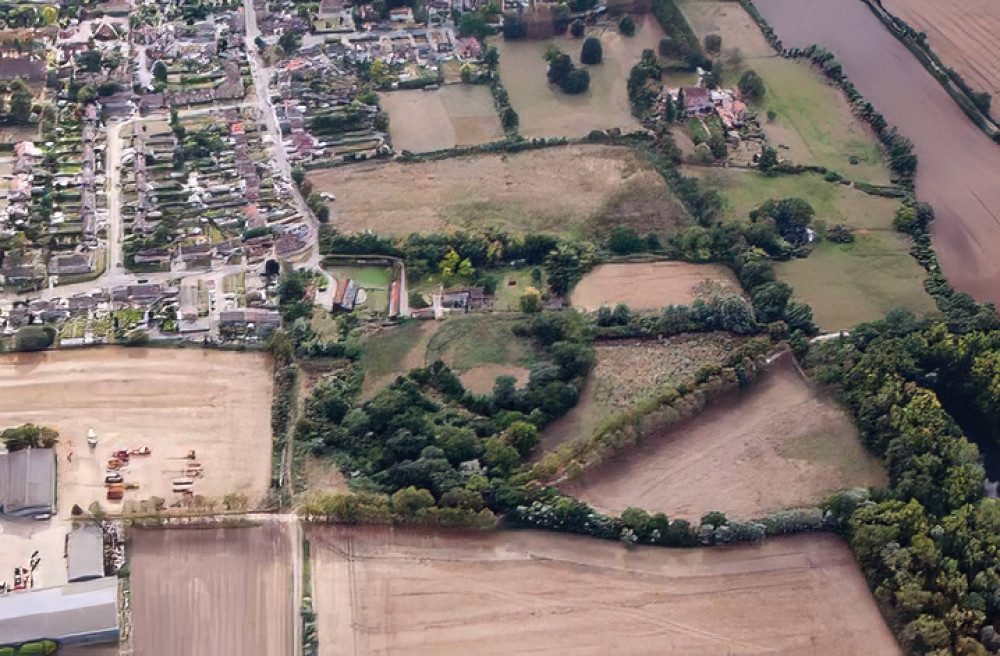

Thurrock is currently under the thumb of the earthmover. Swathes of land have been torn up to make way for the Lower Thames Crossing, while green fields are being swallowed up by housing developments. At a time of such change it is important to reflect on the past.
In the latest of her occasional series of local history features, Thurrock Nub News contributor Susan Yates takes a look at one of the oldest settled parts of Thurrock.
IN my last article I mentioned some of the unusual historic sites in Thurrock.
There are only about 200 ringwork and bailey castles remaining in the UK. Less than 60 of which still have the bailey. We have one in Thurrock. I am talking about the Ringwork and Bailey known as Bishop Bonner's Palace at Orsett. The site consists of an earthwork which has never been excavated.
A ringwork and bailey is a type of medieval fortification consisting principally of a circular or oval area (with an internal diameter of 200 foot) enclosed by an earthen rampart (the ringwork), joined with an adjacent, lightly defended courtyard area (the bailey). The bailey was used for daily life and would include stables, workshops, storage area etc.
The main building would be the lord's residence, a chapel both safely located in the ringwork.

This earthwork is situated to the rear of a Grade II listed late 15th century/early 16th century farmhouse, Old Hall Farm.
The ringwork is thought to have been the main site of a manor mentioned in the Domesday Book 1086/87 as being the home of the Bishops of London before and after the Norman Conquest.
In Domesday it says that 13 hides were held in Orsett by the Bishop of London. The only building remains consist of a fragment of rubble foundation on the north-west side of the ringwork. It is thought that some of the material from the palace was re-used to repair nearby Orsett church. These earthworks are scheduled under the Ancient Monuments and Archaeological Areas Act and are on private land, with no public access.


Its most famous resident was Bishop Bonner.
Edmund Bonner was born circa 1500 to Elizabeth Frodsham. It is alleged that although she was married to Edmund Bonner, a sawyer, from Hanley in Worcestershire his natural father was George Savage whose father was Sir John Savage the great nephew of Thomas Savage.
Thomas served as Bishop of London prior to becoming the Archbishop of York. His first appointment was as the rector of Davenham in Cheshire in 1470. He left Davenham to become rector of Jacobstow in Devon in 1474, leaving there for the Rectorship of Monks Risborough, Buckinghamshire in 1484, and then became Rector of Rostherne, Cheshire.

In 1501 he became Archbishop of York and remained so until his death in 1507. Edmund Bonner was educated at Broadgates Hall, (now Pembroke College,) Oxford. He graduated with a bachelor's degree in civil and canon law in June 1519. Ordained at about the same time he was admitted doctor of civil law in 1525. Edmund became Bishop of London in 1539 until 1549 and then again from 1553 to 1559.
Edmund aided Henry VIII in his effort to split from the church in Rome although remaining a catholic. He became notorious as "Bloody Bonner" for his role in the persecution of heretics under the Catholic government of Mary I.
Following the accession of the Protestant Queen Bonner refused to take the Oath of Supremacy acknowledging the monarch as head of the Church of England. This resulted in his imprisonment. He spent the last ten years of his life as a prisoner under Elizabeth I, at least part of which was served in the notorious Marshalsea Prison, Southwark. This prison first opened in 1373, closed in 1811 and the new prison opened in the same year and finally closed in 1842.

Edmund Bonner died on 5 September 1569 and was buried at St. George the Martyr, Southwark.
Details of Thurrock's other scheduled monuments can be found via this link.
Download our Nub News App:
- It’s FREE and available now
- Breaking news notifications
- Your Town in Your Pocket



Share: