Tales of tragedy, tough times and teaching on the Thames
By Guest author 2nd Oct 2026
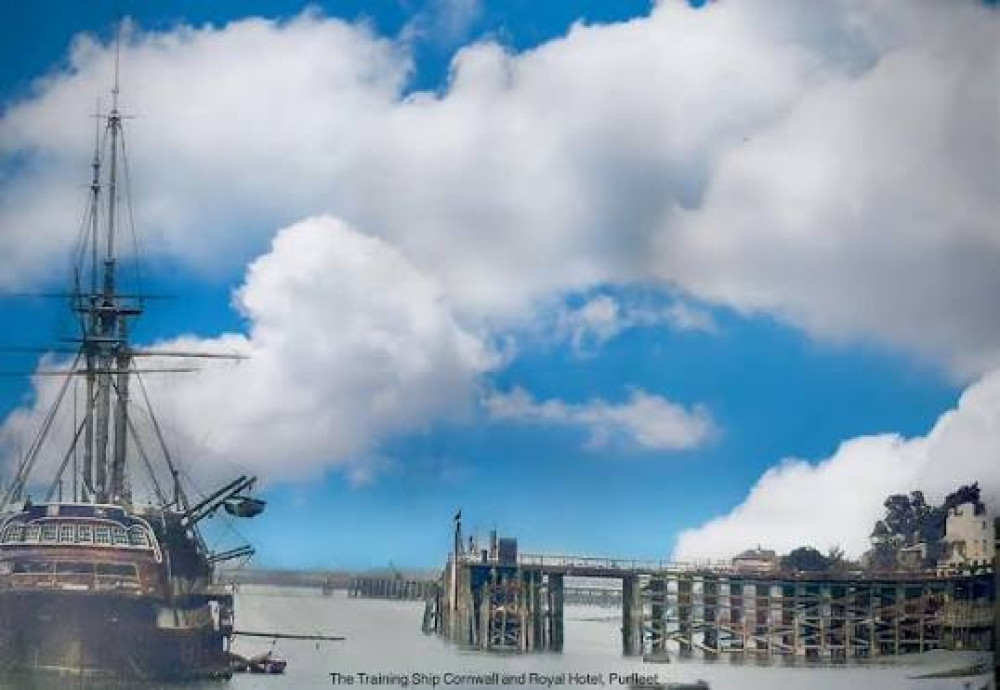

THURROCK Local History Society began their new season of meetings recently when they welcomed back Thurrock Museum curator Michelle Savage who presented a lecture on training ships in the Thames, concentrating on what life was like on board.
Michelle posed a question – progress or purgatory for the boys? Ships were set up to train boys from poor backgrounds, right up to 1970s around the UK, for a better and meaningful life. Should they suffer for their sins?
In 1786 the first training ship was established. The Marine Society sent boys to ships that were available, including old war ships, with not much training. The Merchant Shipping Act and Industrial Schools Act in the 1800s meant offenders could be sent to reform schools. Destitute boys were also trained, involving local businessmen.
Thurrock's training ships were the Cornwall, Goliath, Exmouth, Shaftesbury, Warspite and Joseph Hertz, some renamed, causing confusion. Some were reformatory ships, with industrial ships for lesser crimes, the destitute and poor. Families could pay for those who wanted this education, including orphans of Police Officers.
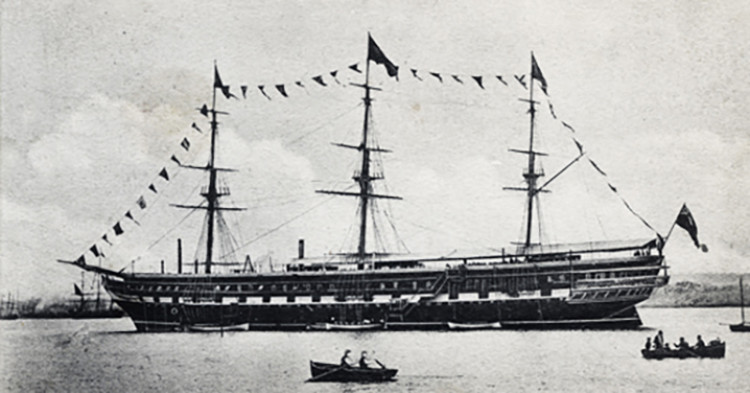
In 1859 the Cornwall was at Purfleet with 25 boys aged 11-18 who had been sentenced to at least three years. In 1865 the Goliath arrived, followed in 1875 by the Exmouth, replacing the Goliath.
There were various changes over the years - the Shaftesbury for runaways, criminals etc., including a new Exmouth, and in 1929 the Warspite in Grays.
Old ships were rejuvenated. Space was needed for schoolrooms, showers and accommodation. They were well ventilated, preventing the spread of disease. They needed coal, fresh water, gas and electricity. Band practice was in the bowels of the ship, pianos and harmoniums being provided.
Download our Nub News App!
- It’s FREE and available now- Breaking news notifications
- Your Town in Your Pocket


There was living space, a gallery for preparation of food and a sleeping area, mostly hammocks which were stowed away each day. The staff had cabins. A carpenters' workshop etc were provided, also a sick bay, with some boys spending time ashore in infirmaries. Belongings were stored in the hold.
Most boys in Thurrock were in the poorer spectrum – orphans, abused by parents, on the streets, workhouses and some from children's homes.
New boys were sent to the infirmary first for a medical, taken to a ship, bathed, heads shaved and clothes burned – some were found to still be wearing socks under the dirt! They had no shoes. Any money they had was set aside. They had a mentor to 'show them the ropes.'
Boys were referred to by their number, not name, called by a bugle. Their uniform included a hat with the ship's name. It was a shock to most boys, up at 5.30am with a regimented daily routine. 8.30pm was prayers and bed. All had to help run the ship. Many were malnourished and not used to three meals a day which were very bland but included meat. Ships' biscuits were fought over.
Education and training consisted of navigation, morse code etc., knots and sewing sails.
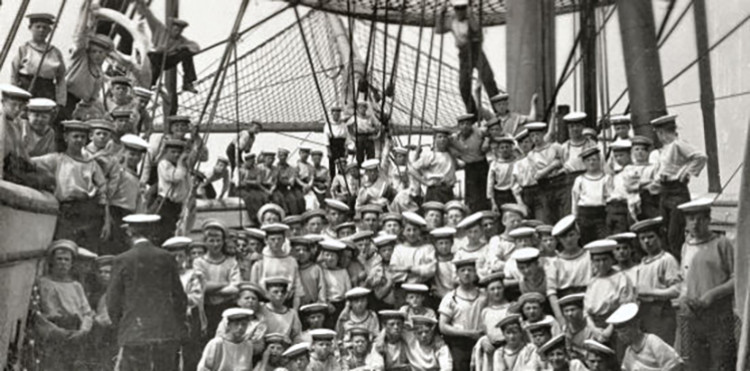
The boys were taught the three Rs. One of the teachers was Joseph Tunstall (father of WW2 hero Peter Tunstall). Carpentry, cooking and music were taught.
Many went into the army and navy bands.

At first there was no education, it being considered not much use if you were drowning!
There were also sports and boxing with some free time, sometimes ashore and pocket money for sweets etc, with some holidays. There was a camp at Horndon if there was no family to go to. A library was also provided. All these provisions varied from ship to ship.
There was corporal punishment for insubordination, absconding, arson, theft, etc. – a birch cane with all boys as witness - one boy on the Cornwall had pushed a vaulting horse into the Thames. There was promotion with privileges – more leave, pocket money etc. also prize giving and trips to the Kursaal.
There was triumph and tragedy.
The Exmouth had a band. In later years Sydney Chaplin (brother of Charlie) who had been given the number 151 when he was on board in 1896, gave a watch to the boy who had inherited No.151.
Eric Morley had also spent some time on the Exmouth.
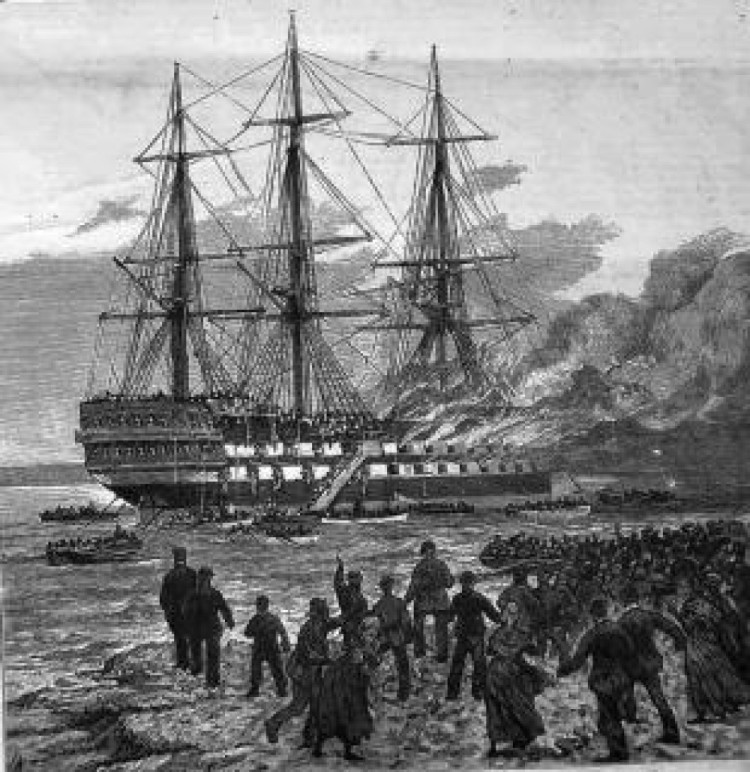
In 1875 the Goliath was destroyed by fire, killing 23 boys and in 1903 an outbreak of typhoid on the Cornwall killed seven boys, due to infected blankets.

In 1915, 16 of the Cornwall's boys and an officer died after its sailing cutter Alert, collided with the steam tug Empress on the Thames at Purfleet.
The education and reformatory acts gave children a second chance.
Some returned to show how successful they had become. Sources vary as to efficacy of training. Harsh regime brought about close companionship – a bonding. Many boys had nothing when first on board and training gave them a better life.
The museum has a collection of magazines from old boys of TS Exmouth, an excellent record of life on a training ship, plus many glass slides and photo albums.
Michelle thanked her volunteer researchers and helped members understand how training ships provided for the boys.
The Society's next meeting is at 8pm on Friday, 16 October at St John's Church hall, Victoria Avenue, Grays when speaker Bill Lindsay's talk is entitled 'William Schaw Lindsay MP, shipping magnate'. All visitors will be made welcome.
Download our Nub News App:
- It’s FREE and available now
- Breaking news notifications
- Your Town in Your Pocket

Share: