Rogue businessman Kavanagh tells court he pocketed tens of millions from Thurrock Council for his own use
By Gareth Davies TBIJ 21st Apr 2026
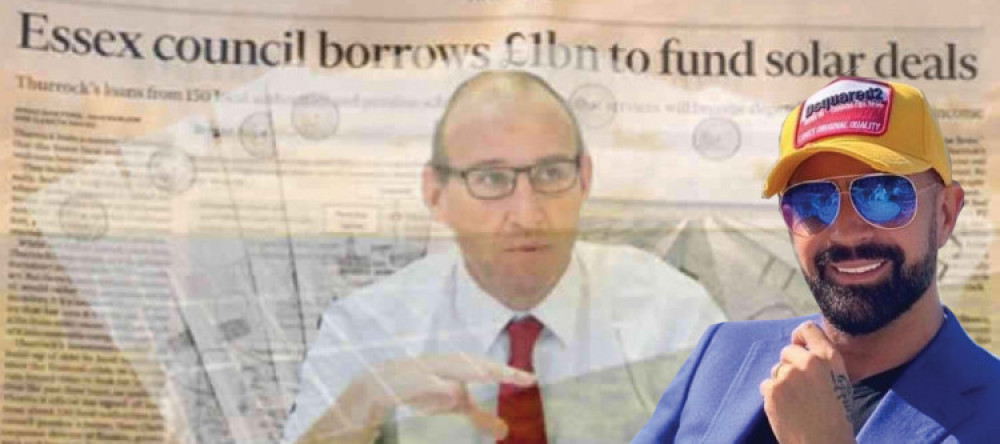

THE rogue businessman behind the financial collapse of Thurrock Council has finally admitted pocketing a "substantial part" of the £130m that the authority thought it was investing in one of his solar farm ventures.
Almost three years ago the scandal broke of how a vast sum of taxpayers' money had funded Liam Kavanagh's luxury lifestyle broke and soon after the council fell off a financial cliff.
Thurrock poured £1bn into secretive investments between 2016 and 2020. Most of the money went into Kavanagh's solar farm bonds, deals which are now the subject of an investigation by the Serious Fraud Office. There were other disastrous deals too, including £94m into an alternative lender that went bust (only £19m of which has been recovered) and £14m written off after a wood-chipping company went into administration.
The solar farms connected to Kavanagh were sold last year, recouping some of its debt, but Thurrock continues to require substantial financial support from the government to fund its running costs. It is borrowing an additional £1m a week just to pay inrterest on the original debt.
Kavanagh's purchases included a country estate, a private jet and a sailing yacht. Through aggressive legal letters to the Bureau of Investigative Journalism which dedicated a team to probing his actions, Kavanagh repeatedly denied receiving public funds that were intended to be investments. Until now.
The media probe eventually led Thurrock to sue Kavanagh for fraud, the council claiming that the entire £130m was lost. In his newly submitted response, Kavanagh admits to receiving a large part of that money "for his own benefit". He says he "honestly believed he was entitled to receive the monies that were transferred to him and to do with as he wished."
Kavanagh has also acknowledged that in the months after his company received £50m from the council, nearly £14m was spent on a yacht, £9m on a jet, £3m on a villa in Mallorca and £800k on a sports car. But he says he is "not able to admit, on the information currently available to him, how the acquisition of these assets was financed".
The 68-page defence is the most detailed account Kavanagh has ever provided about his business deals with Thurrock, which bankrupted the council when its £1bn investment policy collapsed in 2022.
Download our Nub News App!
- It’s FREE and available now- Breaking news notifications
- Your Town in Your Pocket


In total, Thurrock poured £655m into bonds issued by his businesses, with most of the money used to buy 53 solar farms. The legal dispute primarily revolves around three payments – totalling £130m – that were top-ups of an existing investment rather than for the acquisition of new sites.
Thurrock provided £268m to help Kavanagh purchase 32 solar farms – referred to as the Miramar portfolio – in December 2017. The council then increased that investment on three occasions: £40m in November 2018, £50m in February 2019 and £40m in January 2020.
Thurrock insists these increases were subject to the same terms as the original deal, including a strict "permitted purpose" on how the money could be used. Instead, the funds were largely diverted to Kavanagh and used for his personal benefit, which the council describes as "unconscionable", and a breach of contract and trust.
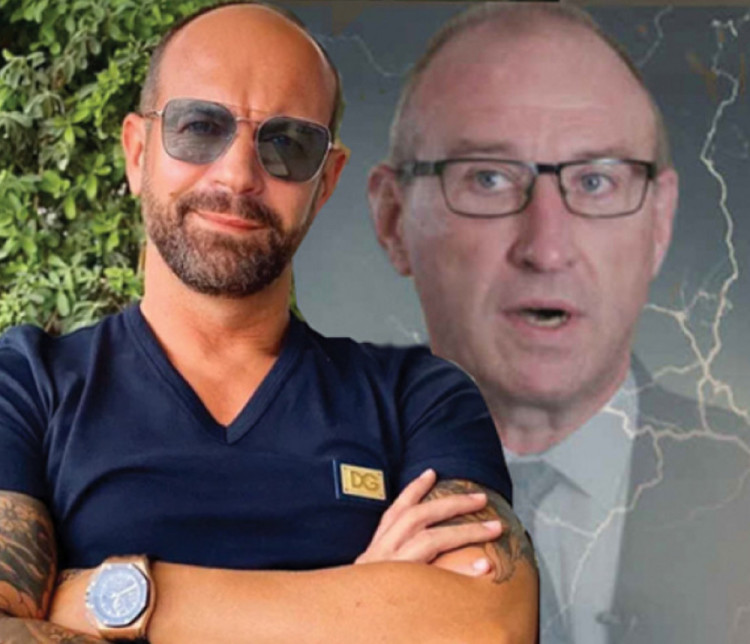
In his defence submitted to the high court, Kavanagh says he met with Thurrock's finance director Sean Clark in November 2018 (likely at the five-star May Fair Hotel in London) to discuss further investments in his businesses.
He claims that he was considering selling the Miramar solar farms but that Clark tried to persuade him not to, encouraging him instead to "release value" by borrowing more money from Thurrock. As far Kavanagh was concerned, all subsequent investments were made on those terms.
Startlingly, he claims for each of the three top-ups, the council transferred the money without any paperwork to evidence that they had taken place.
Financial records obtained by the Bureau show that £40m was transferred by the council to Kavanagh's company Rockfire Investment Finance (RIF) after the November 2018 meeting. It then disappeared from its accounts in three payments, the largest of which was £36.5m. Kavanagh admits he "received the majority of the proceeds … for his own personal benefit" but that there was no "legal impediment to him doing so".

The upshot was that tens of millions of pounds of taxpayers' money – more than Thurrock spends each year on helping children with special educational needs – going straight into Kavanagh's pocket in the space of a day.
In February 2019, Thurrock invested a further £50m. Kavanagh admitted that, after this transaction, RIF bought him the jet, yacht, car and villa but could not confirm how it had paid for them.
Another key part of Thurrock's case is the evidence we uncovered that shows Kavanagh inflating the value of his solar farms. In January 2020, Kavanagh's personal assistant Molly Warnock emailed Clark, copying her boss, to offer the council the opportunity to further top-up its investment in the Miramar portfolio. The email made clear this would be on the same terms as the original investment and attached a valuation of the sites by the Association of Public Service Excellence (APSE).
This valuation was based on a power price for the sites provided by Kavanagh's company Rockfire Capital, which was much higher than the one calculated by Toucan Energy, the company that managed the farms. When Kavanagh was informed that this would have a "significant impact" on the valuation, he ordered his finance director, Ian Walsh, to use this higher figure.
"We're not responsible for the investment decision of others, neither do we undertake [due diligence] on others' behalf," he wrote, adding that it wouldn't be a problem for the council to "accommodate drops in income". The reason to use the exaggerated power price was clear. "These funds … will be used to create a new family investment office and create wealth for years to come," wrote Kavanagh to Walsh. "This has always been my plan.
"By all means check with me but I have given a direct instruction and that's how it is."
Kavanagh has also sought to shift the blame onto the council. He said it was Clark, not him, encouraging the top-ups in the Miramar portfolio, claiming the finance director ultimately wanted to increase the council's solar investments to £1 billion.
It is now two years since Thurrock Council launched its legal action against Kavanagh and it is not yet know when the matter will go to court. The council has been seeking to reach an out of court settlement with the rogue businessman in a bid to cut its legal costs.

Read more on this story and further background into the council's catastrophic decision-making here.
Download our Nub News App:
- It’s FREE and available now
- Breaking news notifications
- Your Town in Your Pocket

Share: